When Growth Created Loss: The Hidden Cost of Shrimp Expansion
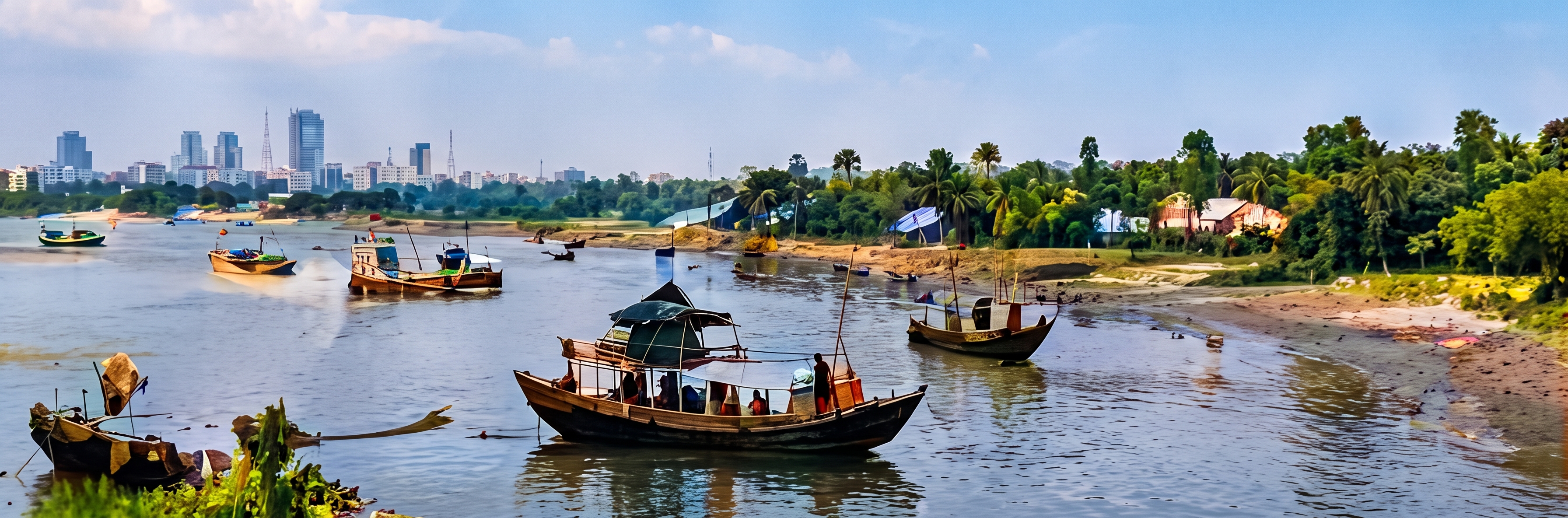
An export success story that increased national income—but transferred risk, loss, and insecurity to coastal communities.
Context (What Looked Like Success)
In southwest Bangladesh:
- Shrimp farming covers ~156,945 hectares.
- Represents ~80% of national shrimp production zones.
- Contributes significantly to export earnings.
- Supports millions of livelihoods directly and indirectly.
At the national level, this appears as:
Economic growth Export competitiveness Employment generation.
Paradox (The Ground Reality)
Field consultations across Khulna and Bagerhat revealed a contradiction (Three Different Realities, Same System):
System Failure (Causal Mechanism)
The issue is not shrimp itself. It is how the system is structured.
- Resource Control: Capital-intensive farming controlled by external actors; local communities lose access to land and water.
- Cost Transfer: Environmental damage (salinity, biodiversity loss) is borne by local communities.
- Benefit Concentration: Profits captured by traders, exporters, intermediaries.
- Governance Gap: Weak regulation, lack of labor protection, absence of enforceable standards.
Critical Insight
The system optimized for production, export, and profit—but did not account for social cost, ecological cost, and power distribution.
Global Relevance
This pattern is not unique. It reflects a broader model of extractive development, export-driven growth, and localized risk concentration. What happens in coastal Bangladesh is a structural pattern across the Global South.
Development is not defined by what a system produces. It is defined by who absorbs the cost of that production.